



Dentalhitec Americas

✦ CLINICAL EVIDENCE

Research & Articles

A growing library clinical studies, dedicated to intraosseous anesthesia and QuickSleeper.


Intraosseous anesthesia was developed to provide faster, more precise, and more comfortable anesthesia by delivering the anesthetic directly into the cancellous bone near the treatment area. This innovative approach has transformed patient experience and clinical efficiency in dentistry.

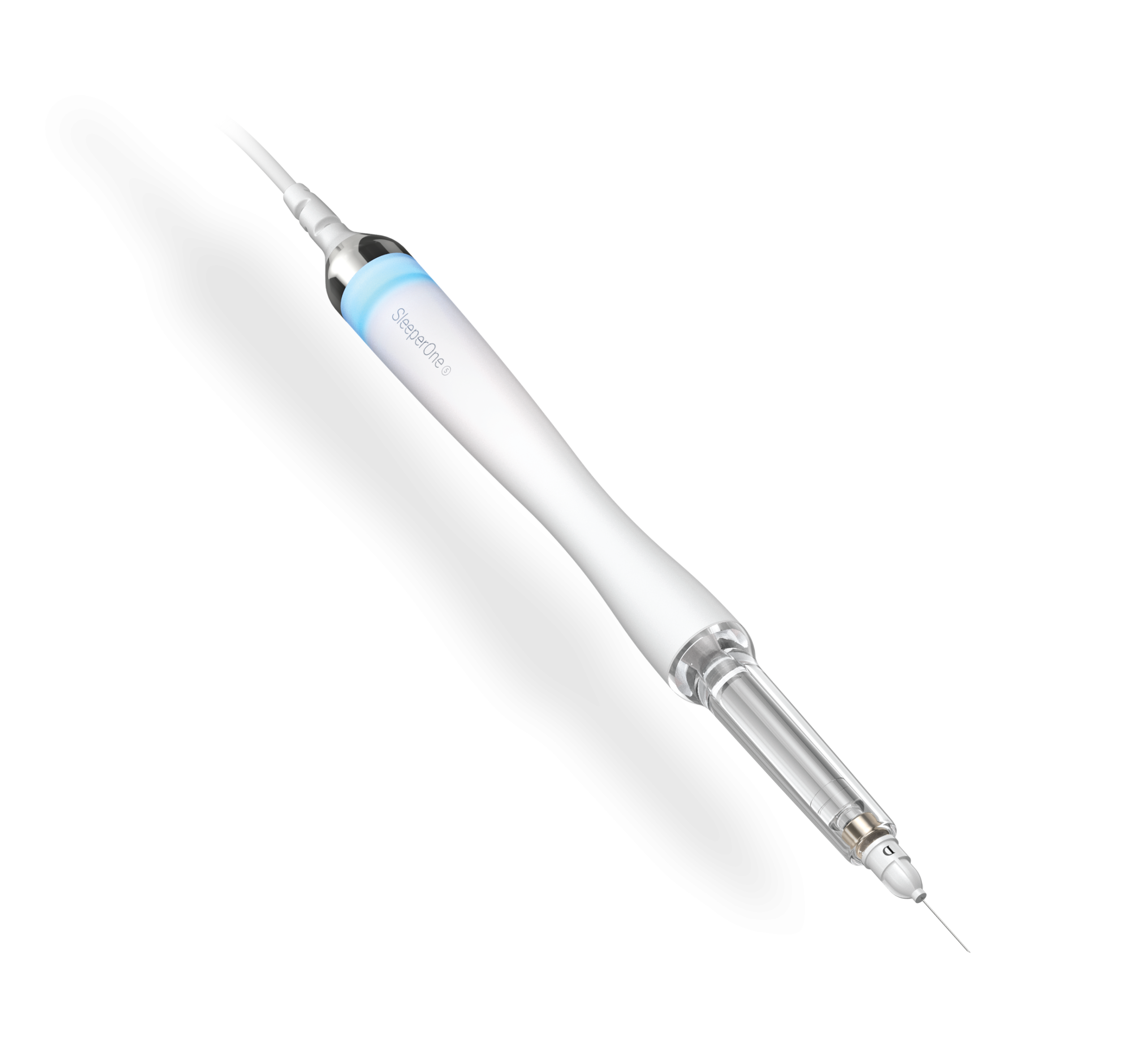
Created in 1997 by Dr. Alain Villette after years of research and development, QuickSleeper became one of the pioneering technologies in intraosseous anesthesia. Today, it continues to support dental professionals worldwide with a painless, efficient, and patient-centered anesthesia solution.
 

BROWSE THE LIBRARY

Dedicated to better anesthesia since 1997.

Click any study below to open the full publication. Each document is presented as an interactive flipbook.

Transcortical Anesthesia and Implantology View Study
Clinical Study

Transcortical Anesthesia and Implantology

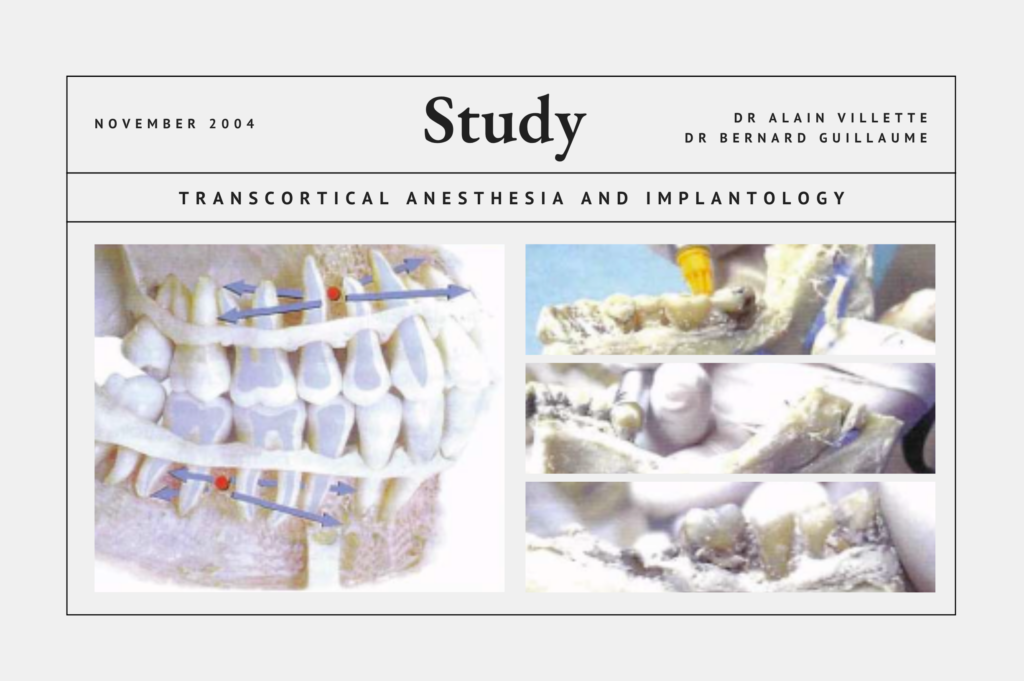
Drs. Guillaume and Villette explore the application of transcortical anesthesia in implantology and pre-implant bone surgery. Based on 500 implant procedures performed between 2001 and 2003, the study confirms safe osseo-integration, reduced anesthetic volumes, elimination of palatal and lingual injections, and improved patient comfort during long surgical procedures including bone grafts and disjunctions.

Read full study
Transcortical Anesthesia: First-Line Treatment Technique View Study
Clinical Study

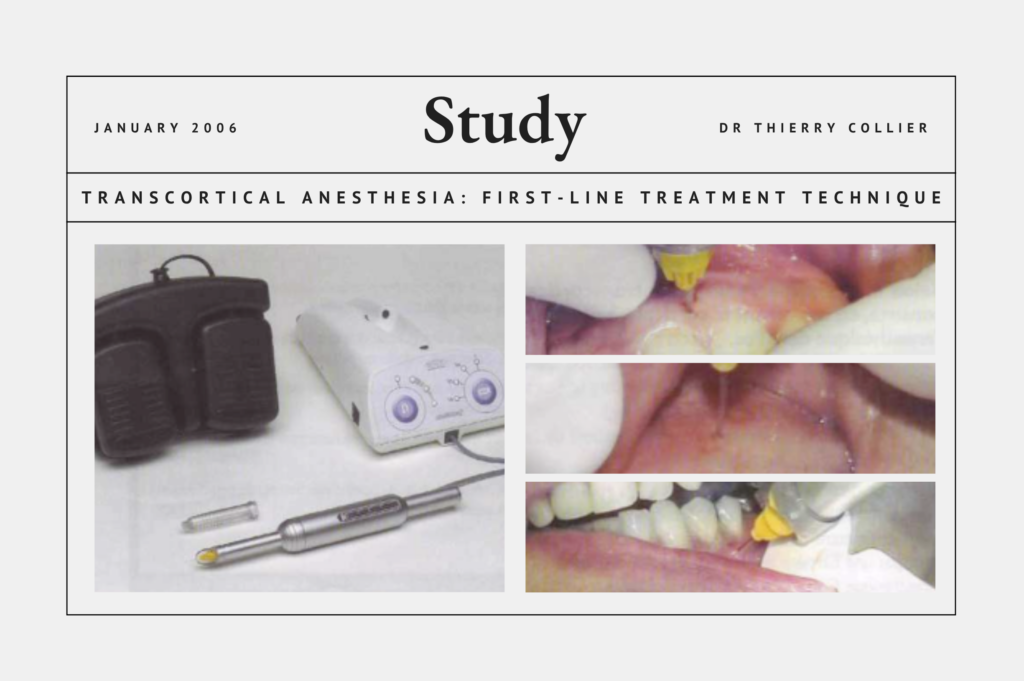
Transcortical Anesthesia: First-Line Treatment Technique

Dr. Collier makes the case for using transcortical anesthesia as a primary technique rather than a backup, comparing the three available delivery systems (Stabident, X-Tip, QuickSleeper) and detailing the three-step injection protocol. Includes guidance on anesthetic selection and vasoconstrictor concentration, with a follow-up Q&A on lidocaine vs. articaine for various clinical scenarios.

Read full study
Benefits of Transcortical Anesthesia in Children and Adolescents View Study
Clinical Study

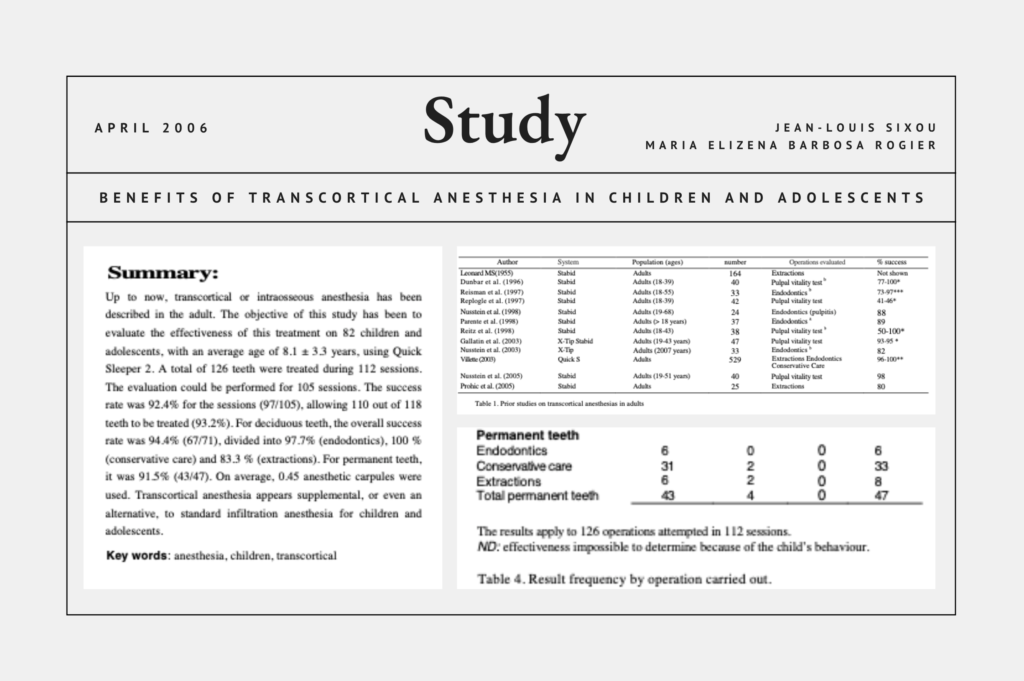
Benefits of Transcortical Anesthesia in Children and Adolescents

The first study to evaluate transcortical anesthesia in pediatric patients. Research on 82 children (average age 8.1 years) across 112 sessions demonstrates a 92.4% success rate with no self-biting incidents and minimal anesthetic volume averaging 0.45 cartridges. Particularly effective for endodontic and conservative treatments on deciduous teeth, where the success rate reached 98%.

Read full study
Effective Use of the Bevel with Anesthesia View Study
Clinical Study

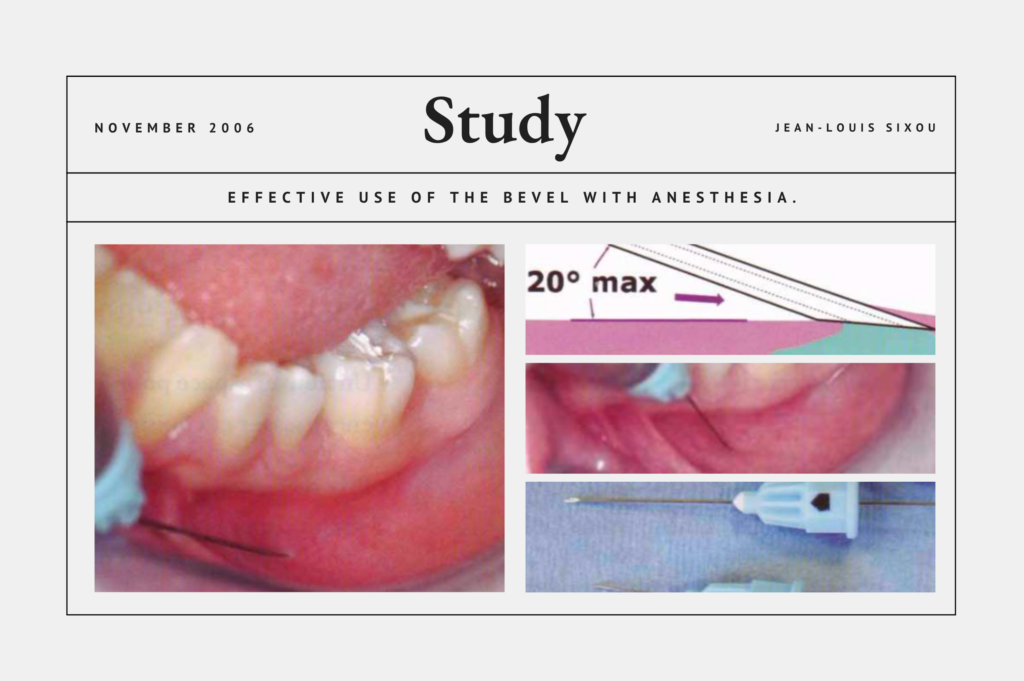
Effective Use of the Bevel with Anesthesia

A practical clinical guide on proper needle bevel positioning to eliminate pain during mucosal penetration. Dr. Sixou demonstrates how a 15–20° insertion angle with the flat bevel placed against the mucosa, combined with controlled injection speed, can render the initial injection painless — a foundation for any successful anesthesia technique.

Read full study
A New Method of Maxillary Anesthesia View Study
Clinical Study

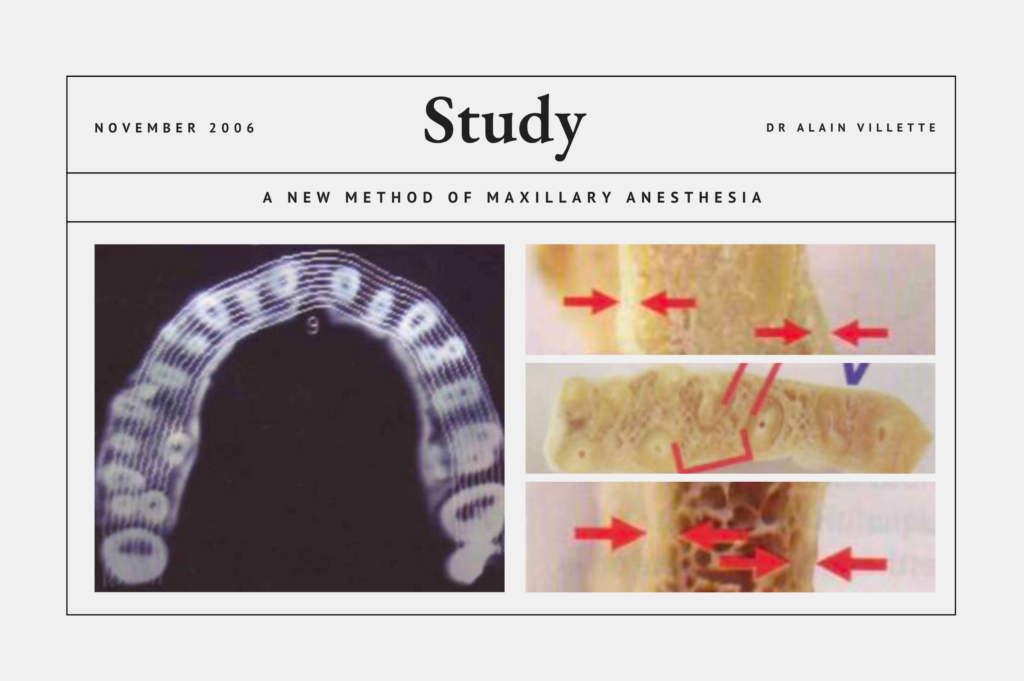
A New Method of Maxillary Anesthesia

Dr. Villette introduces the palatal route for transcortical anesthesia in the maxilla. Through anatomical analysis of the interdental space between the second premolar and first molar, the study shows that the palatine osseous space is consistently wider than the vestibular — making palatal injection more accessible. The technique enables anesthesia of up to six teeth via just three injection points.

Read full study
Efficacy of Intraosseous Injections of Anesthetic in Children and Adolescents View Study
Clinical Study

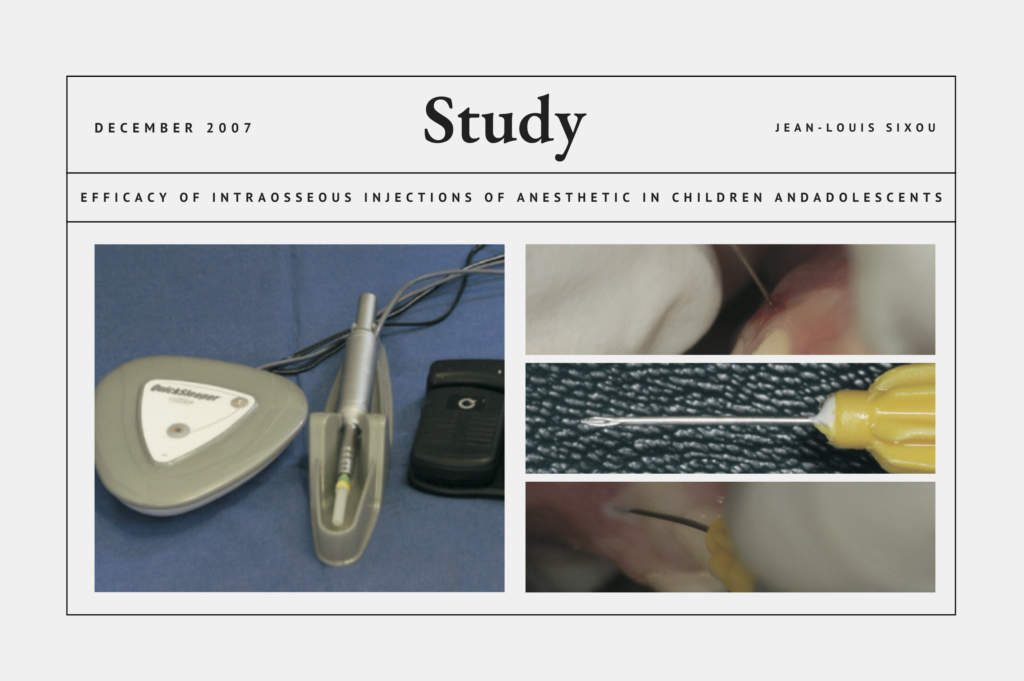
Efficacy of Intraosseous Injections of Anesthetic in Children and Adolescents

Peer-reviewed publication expanding the pediatric research to 181 patients across 225 sessions. The study achieved a 91.9% per-tooth success rate using 4% articaine with 1:200,000 epinephrine and the QuickSleeper system. Results validate computer-controlled intraosseous delivery as a safe, effective alternative to infiltration techniques in young patients with no self-biting reported.

Read full study
Intraosseous Anaesthesia Revisited View Study
Clinical Study

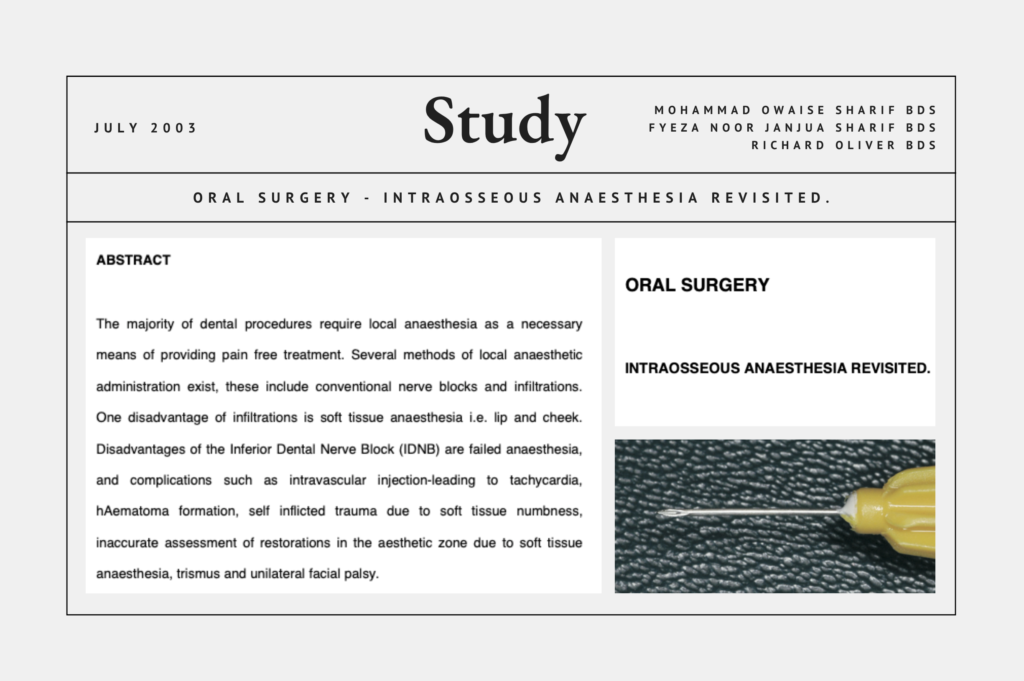
Intraosseous Anaesthesia Revisited

A clinical review from the University of Manchester examining intraosseous anesthesia as a solution for failed inferior dental nerve blocks (IDNB) and the limitations of conventional infiltrations. The article details the QuickSleeper protocol, explains the physics of anesthetic concentration relative to injection distance, and positions intraosseous delivery as a practical answer to dental anxiety.

Read full study
500 Transcortical Anesthesias Performed as a First-Line Treatment View Study
Clinical Study

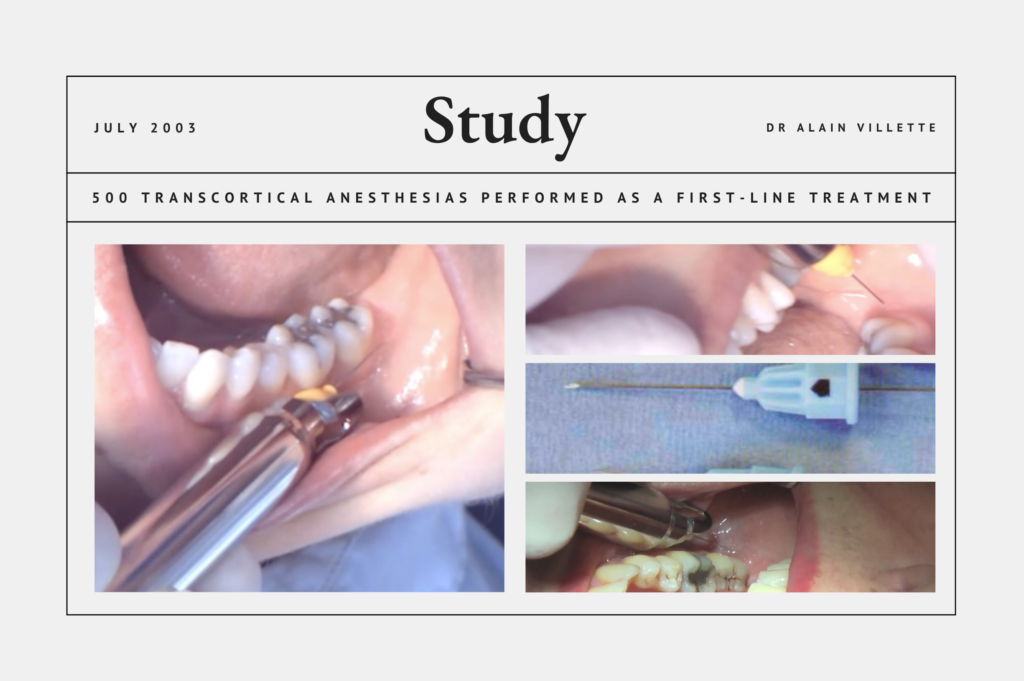
500 Transcortical Anesthesias Performed as a First-Line Treatment

A landmark clinical study analyzing 500 transcortical anesthesias performed as a first-line technique across both maxillary and mandibular procedures. Results demonstrate a 96% success rate (100% with intraligamentary supplementation), an average procedure time under three minutes, and zero post-operative necrosis establishing transcortical anesthesia as a viable replacement for traditional infiltration and Spix techniques.

Read full study